Quick Take
A lot of folks get dual band VHF/UHF antennas, and that is nice and simple and works quite well for most folks, but does come with some compromises here or there. However... what about using a diplexer to instead connect two purpose built antennas for each band? We found that yes indeed, you can!
The Full story
Dual band antennas are as ubiquitous as peanut butter and jelly going together on bread. They work great and do the trick, butthe reality is if you try and do everything, you wind up not doing a great job at anything. Overall though, the industry has gotten pretty darn good at making these dual band antennas, and since you can get them for as little as $50 shipped from Ed Fong, or a roll up antenna from N9TAX for $37, most folks don't bother with a more specific setup.
What would it take to get an antenna setup that's good on both VHF and UHF... and hey what about GMRS while we're at it. Can it be done? Well we here at Real Radio Reviews decided to go down the rabbit hole of could we make a more targeted setup utilizing a Diplexer and two purpose built antennas.
The original questions behind this test was two fold:
First, we found ourselves in possession of a K9VBR Copper J-pole antenna, which featured a killer VHF curve per the linked article. Unfortunately, said K9VBR antenna fell on it's face a bit for UHF.
Second, we got to speak to Ed Fong himself, maker of the Ed Fong DBJ-1 antenna and many other great antennas about is it possible to get a UHF.
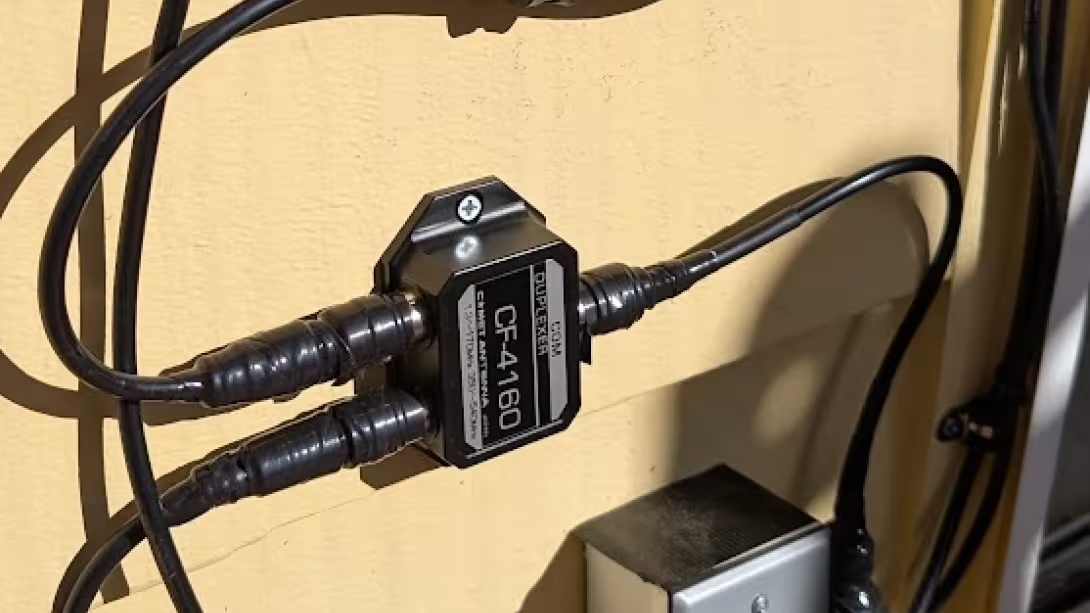
We started our journey with a Coment CF-4160J diplexer. This diplexer allows combining two antennas, taking in 1.7mhz to 170mhz on one input (VHF), and 350 to 540mhz (UHF). We figured we'd put our K9VBR antenna on the VHF side, and then try out Ed Fong DBJ-1 on the other side, eventually moving onwards to a DIY 1/4 wave ground plane based UHF antenna we want to try out.
Results
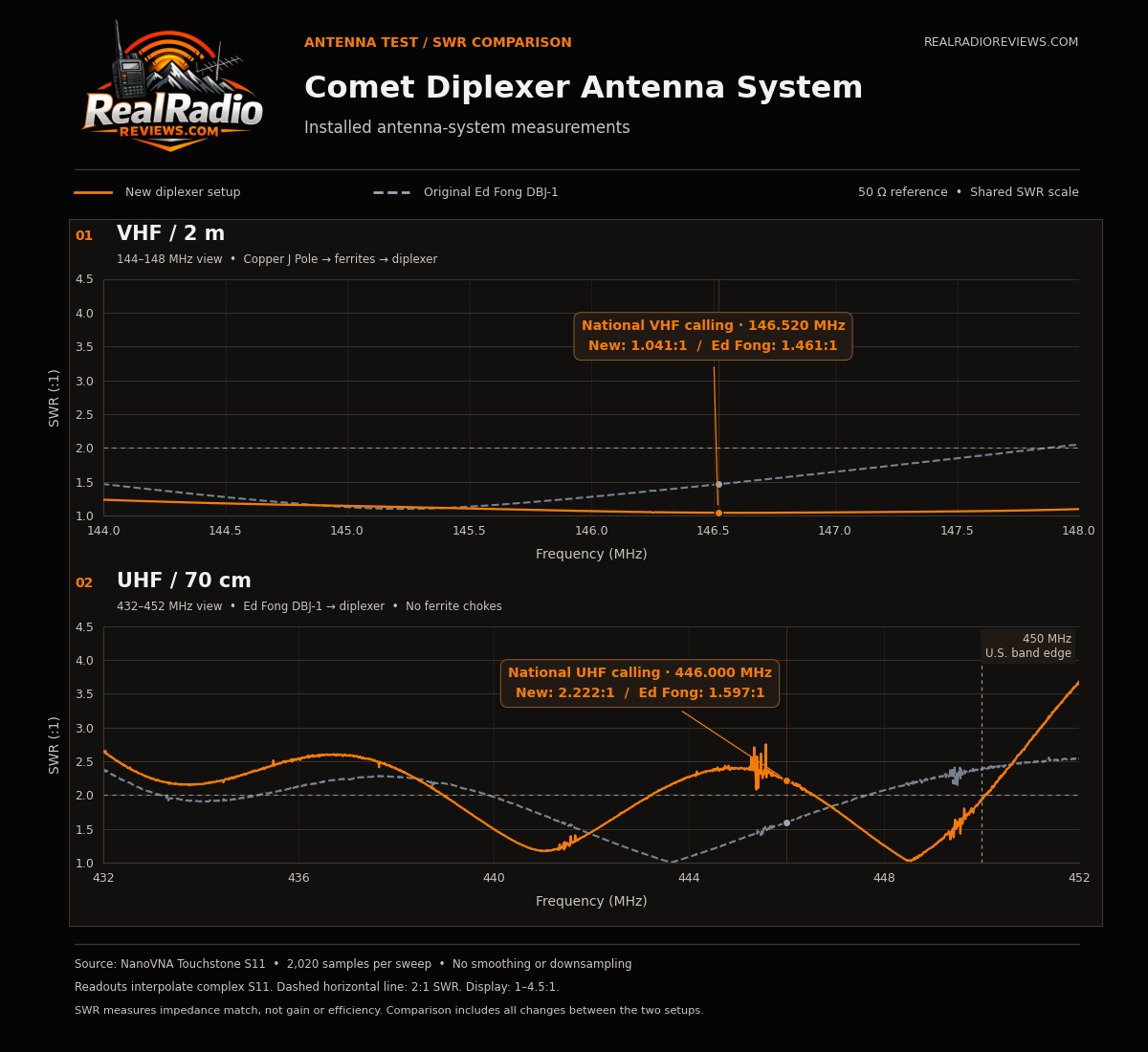
The Diplexer did it's job perfectly allowing us to connect to our two antennas, but it did introduce a bit of an issue on UHF with our EdFong DBJ-1 antenna where it previously didn't have an issue. That issue though is not the Diplexers fault and far more likely the fault of adding in new wiring and that many more connectors elsewhere in our system. In short, we're confident it's something we missed up, and not a reflection of the diplexer. When testing the antenna setup out we had great signal reports from folks, and even had a nice 30 mile simplex conversation with somebody who we'd spoken to days before and prior to the diplexer... and he said the signal quality was indistinguishable.
Bottom Line
If you're interested in a little experimentation and have reached the limit that you can achieve with height, the next logical place to go is making the most of your height, and having two antennas specific to their band of usage can yield notable improvements! Infact... check out how it treated us when we combined our VHF J-pole with the RHS Starduster UHF + GMRS antenna!